

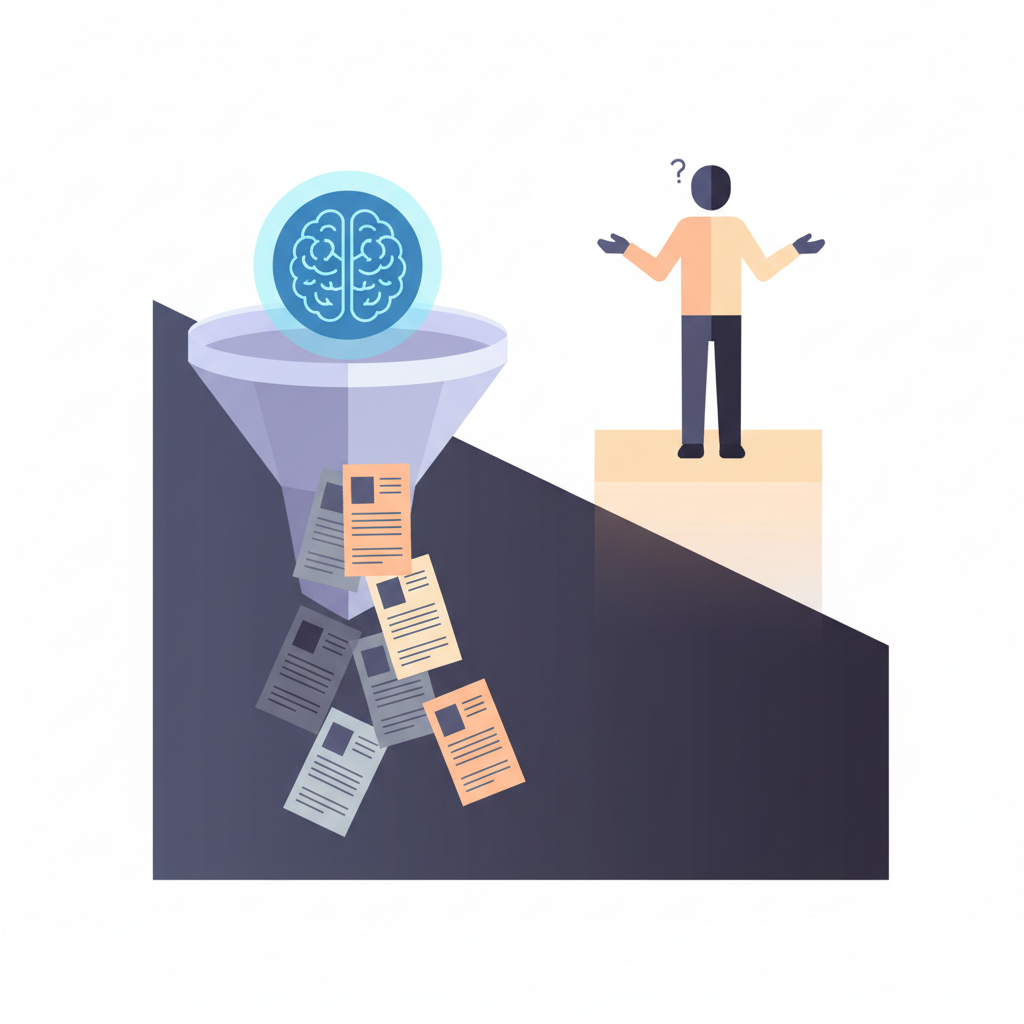
As AI-driven resume screening becomes standard, many recruiters describe a paradox: the technology surfaces more apparently qualified candidates, yet they feel less certain they are seeing everyone who deserves consideration. This “visibility gap” is emerging as a key concern in early-stage hiring, where algorithms can narrow a large applicant pool before a human ever looks at it.
According to recent reporting from HR Executive, recruiters acknowledge that AI screening tools are delivering stronger shortlists. At the same time, they worry that automated filters are quietly removing viable applicants too early in the process. The result is a hiring pipeline that may look efficient on a dashboard but feels incomplete to the people responsible for building teams. For remote and hybrid organizations that rely on distributed talent pools, the stakes are especially high because recruiters may never meet applicants in person and depend even more on digital signals.
Efficiency gains hide an information loss
AI resume screening is designed to solve a real problem: high-volume applications. When a single role receives hundreds or thousands of resumes, human review is slow and inconsistent. Machine learning models can parse work history, skills, education and keywords, then rank candidates by predicted fit. For recruiters, that means less time manually sorting and more time interviewing people who meet the stated criteria.
But ranking is not the same as full visibility. An algorithm optimizes for patterns it has learned from past hires or job descriptions. That can systematically favor candidates who mirror existing employees, use conventional job titles, or include the exact phrases from a posting. Candidates with non-linear careers, transferable skills, employment gaps, or less standardized language may be scored lower—or excluded entirely—even if they could perform well.
Recruiters often do not see what the system discarded. They see the ranked list that remains. This creates an asymmetry: the tool appears to be working because the shortlist contains relevant matches, while the cost of missed candidates stays invisible. The visibility gap is not necessarily about malicious bias; it is often a structural byproduct of how filtering works.
Why the gap matters for hiring quality
When qualified candidates are cut before human review, organizations may lose diversity of thought, background and problem-solving style. Over-filtering can reinforce homogeneity and shrink the pipeline in ways that are difficult to measure after the fact. A recruiter may fill the role successfully and never learn that a strong candidate was eliminated because their resume lacked a specific keyword or used an unconventional format.
There is also a candidate-experience dimension. Applicants increasingly expect some level of automation in hiring, but they also expect fairness. If AI screening feels opaque, candidates may become skeptical about whether a human ever considered their application. That perception can damage employer brand, especially among people from underrepresented groups or those making career changes.
For HR leaders, the visibility gap raises a governance question: How do you validate that an automated screen is focusing on the right criteria? Without regular audits, sample review of rejected candidates, and clear explanations of why certain factors are weighted, the system can drift away from the organization’s actual hiring needs.
Practical steps toward more transparent screening
Addressing the visibility gap does not mean abandoning AI. It means treating the technology as a decision-support layer rather than an autonomous gatekeeper. Recruiters should be able to inspect not just who made the cut, but who did not—and why. Some teams sample a small percentage of rejected applications each week to check for patterns of exclusion. Others adjust keyword weighting to recognize synonyms, adjacent skills and non-traditional career paths.
Clear communication with candidates also helps. If a role is screened using AI, organizations can say so and provide basic information about how the process works. That does not eliminate every concern, but it reduces the feeling of sending a resume into a void. Internally, HR teams can track metrics beyond time-to-shortlist, such as the share of candidates from different backgrounds who reach each stage and the conversion rate from application to interview for non-standard profiles.
Ultimately, AI resume screening works best when it expands a recruiter’s view rather than narrows it. A well-designed tool should help humans notice candidates they might have overlooked, not simply automate the assumptions they already had. The current visibility gap is a reminder that efficiency is not the only measure of a successful hiring process. Seeing more qualified candidates is not the same as seeing all qualified candidates—and the difference can shape who gets a chance to be considered.
As distributed teams compete for talent across wider geographies, recruiters need screening tools that preserve optionality rather than quietly eliminating it. A screening process that silently removes too many people can undermine the very flexibility that remote work promises: access to talent wherever it lives and however its experience is described. Platforms like XMF, which support flexible staffing and HR workflows, reflect a broader shift toward more transparent, human-centered hiring practices—but the underlying principle applies to any organization using AI in recruitment.
Originally published by XMF, inspired by publicly reported industry news.
 Likes 0
 Save
Save
 Copy Link



 沪公网安备 31011702008840号
 Electronic Business License