

For several years, enterprise technology vendors have promised that generative AI would eliminate drudgery and let employees concentrate on creative, high-value work. A new analysis of employee reviews suggests that promise is wearing thin. According to Glassdoor data, the share of AI-related employee comments that are positive has fallen from 81 percent in 2019 to 43 percent today. That is not a gentle cooling of enthusiasm; it is a sharp reversal that HR leaders and business executives should treat as a warning sign rather than a temporary complaint.
A sharp reversal in sentiment
The decline in positive AI sentiment marks a significant shift from the early days of workplace automation. In 2019, most employee reviews that mentioned AI described it as exciting, forward-looking, or helpful. Today, fewer than half of those comments are positive. The change appears across industries, but it is not evenly distributed. Executives and senior leaders tend to describe AI in mostly positive terms, often focusing on efficiency gains, cost savings, and strategic advantage. Frontline employees, especially those in roles such as insurance claims processing, report a very different experience. Some groups now express almost entirely negative sentiment about AI in their daily work.
The gap between executive and frontline perceptions is one of the most important findings in the data. It suggests that AI adoption is being evaluated with two different scorecards. Leaders may see dashboards showing faster processing times or lower operating costs. Employees see a change in the texture of their jobs, including higher expectations, tighter oversight, and less control over how they spend their time.
Why frontline workers feel the strain
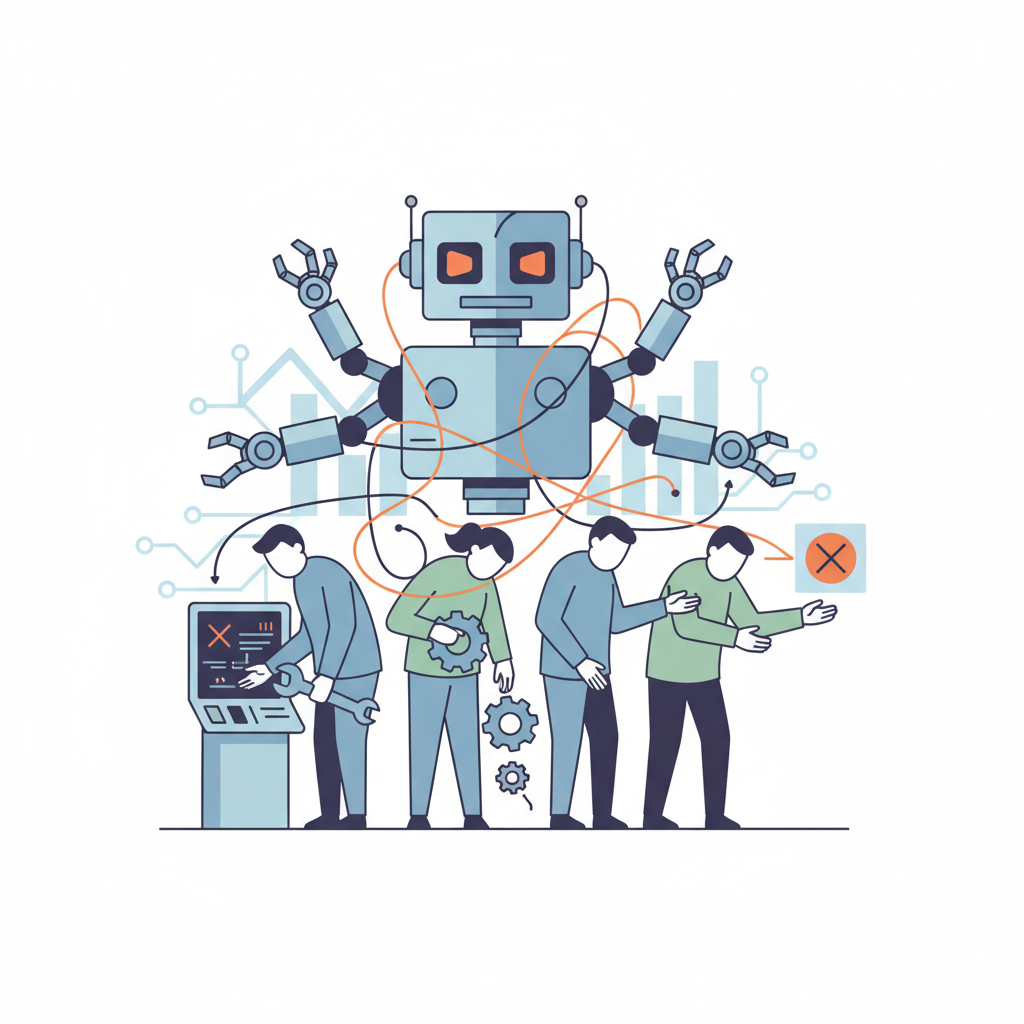
The frustration captured in employee reviews often has less to do with fear of technology and more to do with how AI is implemented. In many organizations, AI is introduced to automate the easiest or most repetitive parts of a role. That can sound positive, but it often leaves workers with the most complex, emotionally demanding, or ambiguous cases. Instead of making the job easier, AI can make the remaining work harder and more intense.
Workers in insurance claims, customer support, and similar functions are especially exposed. They may handle a higher volume of exceptions, interact with more frustrated customers, and face stricter performance metrics. At the same time, AI-driven monitoring can track keystrokes, response times, and decision patterns, reducing autonomy and creating a sense of constant surveillance. For remote and hybrid employees, this feeling can be even stronger because digital oversight replaces informal interactions with managers.
Another factor is the lack of meaningful consultation. When AI tools are selected and deployed by leadership without involving the people who will use them, employees often feel that the technology is being imposed on them. Training may be brief, and the rationale may focus on business outcomes rather than how the tool will affect daily work. Over time, that can turn initial skepticism into active frustration.
What HR and business leaders can do
HR teams are well positioned to bridge the sentiment gap before it hardens into disengagement or turnover. The first step is to treat employee reviews, internal surveys, and exit interviews as leading indicators rather than lagging complaints. If positive sentiment about AI is falling, leaders need to understand why specific roles are affected and what changes would improve the experience.
Second, AI adoption should be treated as a change management challenge, not just a technology rollout. That means including employees in pilot programs, explaining what the tool will and will not do, and creating clear channels for feedback. Workers are more likely to accept AI when they see it as a support system rather than a replacement or a surveillance mechanism.
Third, organizations should monitor the full impact of AI, not just productivity metrics. Employee well-being, error rates, customer satisfaction, and retention all matter. If AI makes a process faster but increases burnout, the long-term cost may outweigh the short-term gain. HR leaders can advocate for balanced scorecards that reflect both operational and human outcomes.
Finally, companies need to be honest about the trade-offs. AI can genuinely improve some jobs, but it can also make others more demanding, more isolated, or less secure. Acknowledging those trade-offs openly can build trust. Employees do not expect every technology decision to be painless, but they do expect to be treated as partners in the change.
The drop in positive AI sentiment is not an argument against using AI in the workplace. It is an argument for using it more thoughtfully. Organizations that listen to employee feedback, adjust their approach, and invest in training and support are more likely to capture the benefits of AI without eroding the engagement of the people who make the business run.
Originally published by XMF, inspired by publicly reported industry news.
 Likes 0
 Save
Save
 Copy Link


 沪公网安备 31011702008840号
 Electronic Business License